
What is the Biggest Mistake in Thermoforming? | C&KPlastics.com | New Jersey
i want to talk to you today predominantly about tooling and why we always almost always go with aluminum temperature control tools now let me give you a little overview of the whole process of thermoforming real quick hi bob carrier cnk plastics second generation owner of cnk plastics located in metuchen new jersey and conyers georgia everything in the plastic processing starts with resin resin is important from a thermoforming standpoint you pick out the parameters you'd like for the job whether you need weatherable high impact low impact ul rated rf transmission etc etc etc but that's not all we're looking for what we're looking for is a very consistent melt flow what we need this plastic to be able to do is when an extruder makes it into a sheet it's got to have some stiffness to it so that the sheet can get get formed in a very low stress environment now there's always going to be stress because you're melting the resin and you're squeezing it out of a barrel into a sheet die that is manipulating the material out to a sometimes eight foot wide sheet and then extruding it down through a series of rollers that cool it and emboss it sometimes as you can see in this sheet that's a grain pattern on it that comes out of the sheet and when we thermal form we can keep that grain in the process but when we take this sheet and we irradiate it with ir heaters on the top and the bottom that we want that melt flow to be consistent so that it sags the same every time what i mean by sag is that when this sheet goes below its glass transition point it's no longer solid it's and it gets to be like taffy and we want a consistent bag that is going to process the same way all the time that comes to number two on the list it's very very important to have good microprocessor controlled heaters you'll never get a good thermal form part unless you make sure you're heating the core which means you need to be able to measure the surface temperature of the sheet and know what the soak is of the radiation into the middle of that sheet heating an eighth inch piece of material or a one inch piece of material is completely different we do some one inch material but you cannot heat that with ir heaters you have to heat it in a convection oven and then thermo form it it's all about the core temperature and plastic is not conductive of thermal energy so you need to make sure that the radiation penetrates specifically the same way every time every shot in order to get a successful part now we put all this effort into making microprocessor automated production equipment we at cnk plastics have lots of machines we have zero sag machines that are shuttle machines we have lots of single station machines but what we predominantly use is automatic load and unload unload rotaries what's interesting about a rotary is while you're loading and unloading a part you're heating apart while you're heating the part you're molding and cooling apart so the process takes place all three at the same time as as far as a shuttle machine you heat the part when it's heated at the temperature you shuttle it to a molding station you mold the part then you cool the part and then you de-mold the part and then you reload the part if it takes three minute cycle that's three plus three plus one that's a seven minute cycle on a rotary it's going to be a three minute cycle so if you want to make a part every three minutes tooling is of utmost importance so it's really important that you have other process controls within your system you need to have pyrometers that measure the surface temperature of the material and a lot of times you use a sag eye so whenever the the sag of the bag of the melt the glass transition point of the material hits that sag eye it automatically rotates the biggest fundamental difference between thermal formers today is there's really two class of thermoformers the thermoformers that invest in the process and and the techniques and builds relationships with their suppliers and those that just buy sheet and process it in old equipment they call it an art it is not an art it is a science its parameters but the most important difference that separates out class a thermoformers with all the other people is temperature controlled tools this is just a small little casting but you these are stainless steel tubes they are actually embedded in the wall of the casting casting aluminum is very thermally conductive as we all know so when we're we're running temperature controlled water throughout this casting we're maintaining the the temperature of this tool less than a degree fahrenheit now this is a little tiny tool i can hold just to show you all but when you get to big giant tools especially those that are running semi-crystalline material and what i mean by that is if you have a temperature gradient of five degrees in a truck bed liner for instance and you've all seen it where the truck was a different temperature here the bed liner than here you're going to get warping because the crystals the crystalline structure of the material sets up incorrectly and it warps warps now not only that but using the temperature control tool maximizes all of the engineering properties and what i mean by that is the tensile strength the notched in impact the falling dart impact the modulus of elasticity all the engineering properties are pretty much from a resin bar that's injection molded and they they test it now we're a lot less stressed than any resin bar that's injection molding if molded properly off of a temperature control tool you will exceed the properties of the resin that are published period it's absolute fact now there's a lot of tools out there and people try to use wood tools real old school school ceramic tools polyurethane tools they're using a lot of printed tools you need a highly conductive material so you can get the heat out of the material the same way every time that's why we we tend to go with castings now you can also do aluminum tools and if you gun drill the aluminum tools and you manifold the aluminum tools tools with with cooling lines you get a really good cool temperature control tool and shallow tools that have a lot of sharp corners and you're going to have an aggressive aggressive pattern on so you're going to etch the tool tool aluminum billet machine is probably the way to go but the least expensive and the most competitive way to make a first class tool is you you make a casting you do not want to do a plaster casting you do not want to do a green sand casting you want to do no casting processes that use any water whatsoever because water when it gets heated up into the turn anywhere near the temperatures of aluminum vaporizes and it creates porosity so you want to make sure you have a low porosity casting if you have a high porosity casting the porosity gets to the surface and you can get imperfections we battle this all the time well how come your tools are 20 or 30 percent more money than the other guys and they say their ceramic tools or urethane tools work better or just as good as aluminum temperature control tool plain and simply it's all false it's all smoke and mirrors you want to have a part that's repeatable be able to make parts every two minute the same now and five years from now off that same tool that will last forever because of that there's very low stress so it's not like you know thousands of psi like in an injection molding process it's only 14 psi if vacuum formed and maybe at most 90 psi if you're pressure forming so we at cnk always insist upon aluminum temperature control tools and sometimes we don't win the jobs but we think it's more that we're not educating people as to the benefits of aluminum temperature control tool tool so you're wasting your money if you spent millions of dollars on process controls and process equipment and you don't spend a couple thousand bucks to make a good temperature controlled tool thank you i hope to hear from you all
Back to C&K PlasticsPartGurus Facility Tour | Official Supplier Channel:
C&K Plastics →
Verified shop facts
- Location
- NJ
- Processes
- Assembly, Vacuum Forming, Pressure Forming, Thermoforming, Tooling / Mold Making, Injection Molding, Foam Fabrication, Deep Draw Stamping, CNC Machining, Twin-sheet Forming, Extrusion, Metal Stamping
- Materials
- Fiberglass, ABS, Polycarbonate, Polyethylene, Foam, Plastic, Resin, Steel, Stainless Steel, Aluminum, Polyurethane, Ceramic
Buyer-intent Q&A
About this supplier
C&K Plastics is a second-generation thermoforming manufacturer with facilities located in Metuchen, New Jersey and Conyers, Georgia. The company specializes in plastic processing, utilizing a range of equipment that includes zero sag shuttle machines and single-station machines, with a primary focus on automatic load and unload rotary equipment. Their process expertise spans material thicknesses ranging from eighth-inch to one-inch materials, the latter of which are processed via convection ovens. The facility emphasizes scientific process control, utilizing microprocessor-automated equipment, pyrometers, and sag eyes to maintain consistency throughout production cycles. C&K Plastics distinguishes its manufacturing approach through a strict insistence on using aluminum temperature-controlled tooling, which they utilize to eliminate warping and maximize the engineering properties of the finished parts, including tensile strength and impact resistance. By using low-porosity aluminum castings and billets, the company prioritizes tool longevity and part repeatability for their customers.
More from C&K Plastics
Vacuum & Pressure Forming: Manufacturing Massive Plastic Parts Up to 14 Feet at C&K Plastics
Assembly
Need Custom Fiberglass Molding? This is a Better Option | C&K Plastics Thermoformers | Metuchen, NJ
CNC Machining
Need Large Plastic parts formed up to16 FEET? CandKPlastics.com for Thermoforming and Vacuum forming
Metal Stamping
How Vacuum Forming Can Replace Large Fiberglass Parts | C&KPlastics.com | New Jersey
Injection Molding
Metallic Finish Plastic Parts Vacuum Formed | C&K Plastics Thermoformers | Metuchen, NJ
Metal Stamping
Machining Plastic up to 1.5" Thick | C&K Plastics Thermoforming | Metuchen, NJ
Metal Stamping
Most materials in stock for faster vacuum formed parts | C&KPlastics.com | New Jersey
Metal Stamping
•clip7 eye candy C&K Plastics Thermoforming
Thermoforming
•22TOURCK C&K Plastics Thermoforming
Sheet Metal Fabrication
Thermoforming, Injection Molding, Metal Fabrication - Which is Best for Your Part? CandKplastics.com
Metal Stamping
What Machines Should a Thermoforming Supplier Have? | CandKplastics.com | New Jersey
Metal Stamping
DFM - Design for Manufacturing Saves the Big Bucks | CandKplastics.com | New Jersey
Metal Stamping
How to Start a Project with Vacuum and Pressure Forming | CandKplastics.com | New Jersey
Metal Stamping
Injection molding? Rotational Molding? Thermoforming? Which do you use? | CandKplastics.com
Metal Stamping
Which Molding Process? Injection, Vacuum, Pressure? CandKplastics.com | New Jersey
Metal Stamping
What Tolerances Waste Money and Which Are Needed? | CandKplastics.com | New Jersey
Metal Stamping
Are all Plastic Molders the Same? | CandKplastics.com | New Jersey
Metal Stamping
We made sure the material shortage wouldn't effect us! | CandKplastics.com | New Jersey
CNC Machining
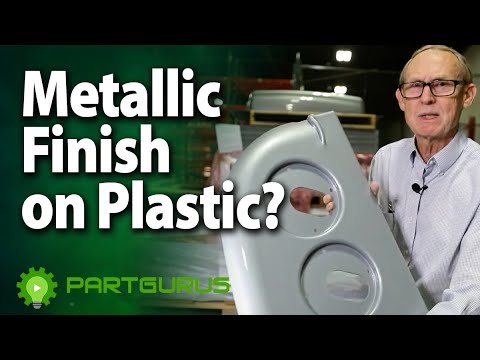
Metallic Finish on Plastic? Thermoformed and Metallized | CandKplastics.com | New Jersey
CNC Machining
Convert Metal to Plastic with Vacuum Forming | CandKplastics.com | New Jersey
Injection Molding
What is Thermoforming? Vacuum Forming? Pressure Forming? ask C&K... CandKplastics.com | New Jersey
Injection Molding
Large Plastic parts manufacturing | C& K Plastics vacuum and pressure formers
Welding
Thermoforming Material Shortage? C&K Plastics Thermoformers
Vacuum Forming