
Investment Casting - high tolerance complex parts with inexpensive tooling - Lamothermic, NY foundry
of all the casting process except for maybe die casting, it's going to give you your tighter tolerances better finishes and more detail Lamothermic makes investment casting...is investment casting better than Machining? you bet we can make your parts cheaper and quicker than you can Machining them out of bar stock investment casting is much more precise we can hold plus or minus 5,000 per inch we can handle from fractional ounces up to about 60 lb and we can pour a variety of different Alloys your carbon steals your alloy Steels your stainless Steels precipitating hardening Steels Cobalt based nickel based so investment castings you can get almost a near net shape part that means as little Machining as possible some people choose investment casting cuz the Finish is exactly what they need they have a lot of In-House capability where we don't have to send it out it saves on cost and it also reduces lead time if you don't want to spend the money to Tool up on a pattern we can 3D print your pattern for you to run prototypes quantity we can handle all quantities we get from somebody order five or 10 Parts to where we're making 20,000 Parts a day for surgical instruments we've been perfecting our processes since 1976 but really what makes us tick is our people we have some of the best people you will ever [Music] find this is where it all starts this is a wax pattern made in our injection molding machine all investment casting processes start with a wax pattern so these these tools are fully automated the platins will close the wax will inject the cores will pull and it'll inject the part into the water for the operator to inspect the water soften to blow if you drop this on the ground it'll shatter yes we design all of our tooling the tooling is done by our Engineers to optimize the way the tool runs if we're making a part on the automatic machines we can probably make Parts up to about 25 30 lb when they end up in metal Hey Garrett one more thing we should mention is that with automatic tooling we can offer better return and investment on higher volume runs automatic tooling allows us to not tie the operation of these machines to the operator with the machine handling the volume of work that allows us to produce at a higher rate and it'll run Parts all throughout the shift all the operator has to do is simply inspect the parts the great part of investment casting tooling is the tooling doesn't wear all that's being shot into it is wax so the tooling will live for conceivably forever if you're going to start making several hundreds apart you're typically want to invest in a tool you can do two different Metals with the same tooling too the changing of the metals doesn't have to do with the tooling this is our sprueing area where we take the wax assemblies and we attach them to the tree so what you can see here is the parts are being attached on with sticky wax...that's the runner where the metal is going to be delivered to the parts the number of parts that we can fit on a runner directly affects the cost of the part if we can get a lots of Parts say 60 70 80 to 100 Parts on a tree that means your piece price is going down every wax pattern that we make needs a ceramic shell in order to accept the metal here's where we make the ceramic shell this is our automated dipping room hi I'm Matt and I'm going to be making your shells this is the robot and the producer system basically what dips all the shells what Matt is doing here he's loading up the robot he's taking the patterns that are assembled here loading them onto a cluster and the robot inside the cell will pick it up and dip it into the various tanks over here we have the uh Prime tank it's basically the Face coat of the shells and then on on the other side we have a backup tank which builds the strength of the [Music] shell the first coat it's going to be putting on is called The Face coat that'll capture all the detail and then it'll bring it into the rainfall sander here this is fully automated this will run day and night with only one operator attending it as opposed to hand dipping so this is our conveyor system where the shell dry in between coats our Engineers specify part programs for them to use typically average dry time around 3 hours 4 hours the shells will go up to the roof line when it Peaks it Peaks at 49 1/2 ft and the shells come back down the other side to dry you'll notice that some are white some are gray the reality is that each one has its own special formula depends on the part geometry the weight of the part and the metal that's being poured into it and then Shelly waits for the next assignment Shelly knows the next assignment because it's all programmed in after she places this she's going to go to the next programmed cluster pick that one up and keep going let me go show you where we melt out the wax this is our autoclave SL boiler clave where we put the trees in to remove wax the wax will melt out and the metal will be poured in behind me is our Foundry this is the heart of the business the highly trained they have a lot of experience and they love doing what they do it's a tough job these guys do it really well so after the parts are poured they have the ceramic shell on them that need to be taken off they get vibrated or knockoff machine and then put into our spinner hanger for there's two blast wheels that blast stainless steel shot at the park cleaning the ceramic off of the park the next thing is to take the parts off of the tree we do that via an abrasive cutting wheel this is our finishing Department after parts are cut off from the runner they're moved into this department to do all the final post process parts are put into our wheeler braider systems to remove the ceramic we do gate grinding here we also do sand blasting and inspection on all of our parts so here's a door handle for our Hospital these parts that I'm pointing to are Gates that's where the metal enters the mold they're not part of the part and they need to be removed so these machines along the back wall here are automatic Grinders they have table rotary tables the great thing about these machines is they can run really high volume products over and over and over again very repetitively a lot of people ask about cores so here's an interesting part that we do that has cores we're able to cast the hole in it this is a hole here the wax towing has cores that we pull out we can do blind holes through holes you D it two cores that get split out to make this Center section one here one that gets pulled out and then one that creates this pocket here this is a an industrial door hinge goes on the bottom of the door and it swings open but this is a shackle for the sailboat that we make this is a piece to a movie projector we make a couple different sizes here's an example of a part that we make we make one flavor in bronze and another in stainless and we also machine it in house several types of parts in the ascas condition are too hard to machine so what we do is we heat treat them we do that here with our vacuum furnace and then our stainless is like our 300 series kneeling is required it's because of generally for corrosion resistance you've heard a light saw manufacturing this is lights out testing Welcome to our NDT testing room sometimes in in our industry castings can have surface and subsurface discontinuities so the only way to find that would be to either put on magnetic particle inspection machine which we have here or with our fluorescent penetrant inspection which we see here and both of these methods are considered to be non-destructive testing magnetic inspection we put the part in the coil bathe it with our um bath and wring particle put the amperage through it mag it and then we check it under the black one and we make sure your parts have no problem we also do radiographic inspection we take the parts we x-ray them we process the film to make sure there are no internal discontinuities so let's say we want to check the mechanical capabilities of the parts this is where we use our star tensil test people often ask how we keep paracity out of our parts we use computer simulation to simulate everything on The Foundry floor before we even go ahead and build your tool here's a great investment cast part the thing is customer made a lot of changes the good news is it didn't cost a client a lot of money why because we were using solidification software the solidification software points Us in the right direction so whether or not we have enough feeding into the part whether it's the gate size the temperature of the mold temperature of the metal we can adjust all those on the Fly until we get a sound casting cuz you don't pay for the tooling until it's just right in order for our us to make our deadlines the tools the machines have to be in tiptop shape and that's that's where I come in and if they go down I'm going to work as hard as I can to get them back up again I'm Jacob y I'm the in-house toolmaker here at thic I love what I do so it's it's great I love working here if our employees see something on the floor that can be improved they're not afraid to speak up the goal is to save time and money on your investment [Music] casting
Back to LamothermicPartGurus Facility Tour | Official Supplier Channel:
Lamothermic →
Verified shop facts
- Location
- Brewster, NY
- Processes
- CNC Machining, Investment Casting, Die Casting, Metal Casting, 3D Printing / Additive Manufacturing, Heat Treating, NDT / Non-destructive Testing, Plating / Finishing, Product Design / Engineering, Tooling / Mold Making, Grinding, Assembly
- Materials
- Stainless Steel, Nickel / Inconel, Bronze, Ceramic, Aluminum, Copper, Titanium
Buyer-intent Q&A
About this supplier
Lamothermic specializes in investment casting, offering a near-net-shape manufacturing process that provides tight tolerances of plus or minus 5,000 per inch and high-quality finishes. The facility produces parts ranging from fractional ounces up to 60 pounds, working with various alloys including carbon, alloy, stainless, precipitation hardening, cobalt-based, and nickel-based steels. Their versatile production capabilities accommodate orders from small prototype runs of five or 10 pieces to high-volume production reaching 20,000 parts per day. The supplier serves diverse industries, including medical, industrial, and maritime applications, with products such as surgical instruments, industrial door components, and sailboat shackles. They offer in-house engineering and 3D printing for prototypes, allowing them to optimize tooling and workflows to minimize post-process machining costs. To ensure quality and efficiency, the facility utilizes automated wax injection, robotic ceramic shell dipping, and advanced simulation software to perfect casting designs before tool creation. Their in-house processing includes vacuum heat treatment, gate grinding, and comprehensive non-destructive testing, such as magnetic particle, fluorescent penetrant, and radiographic inspections. By maintaining extensive in-house capabilities and utilizing automated, high-repetition machinery, the supplier focuses on reducing lead times and piece costs. They emphasize a collaborative culture where staff and engineers actively identify improvements to optimize the production process for their customers.
More from Lamothermic
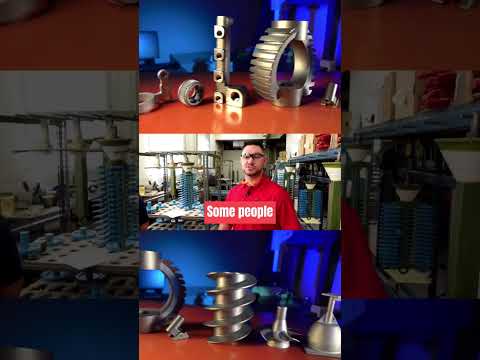
Investment Casting at Lamothermic #manufacturing #partgurus #casting #cncmachining
CNC Machining
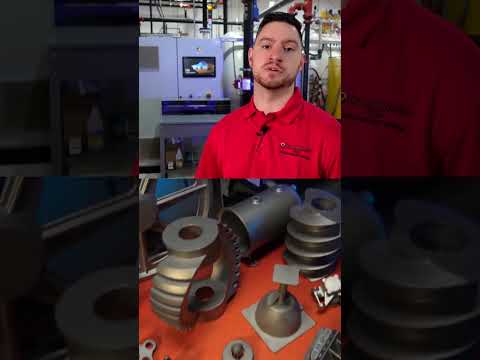
Lamothermic Investment Casting Brewster NY
CNC Machining
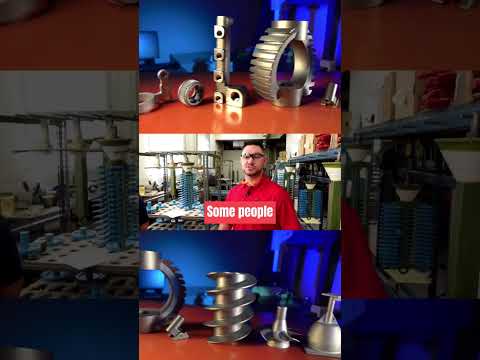
Metal Casting at Lamothermic #manufacturing #partgurus #casting #cncmachining
CNC Machining
Lamothermic Investment Casting #partgurus #investmentcasting #cnc #metalcasting
CNC Machining
Lamothermic - Stainless Steel Casting Gurus #partgurus #investmentcasting #americanmanufacturing
CNC Machining

Investment Casting foundry - Steel, stainless and alloys - Lamothermic, NY foundry
CNC Machining

Investment Casting Experts - Steel, stainless and alloys - Lamothermic, NY foundry
CNC Machining
••1 minute wolf | Lamothermic
CNC Machining

Stainless Steel Precision Investment Casting | Lamothermic | Brewster, NY
CNC Machining
Investment Casting with better finish v Sand Casting | Lamothermic Precision Investment Casting | NY
Grinding