
Lapping, polishing, grinding, machining | Surface Finishes of Cabot Microelectronics | Aurora, IL
what we do is we polish and lap hone surface grind and diamond machine things to very very fine finishes and very close dimensions good afternoon my name is Stanley Xia I'm a process development engineer at Cabot microelectronics specifically the surface finishes division each each one of these are a little different the honing process is for doing the inside of pipes and cylinders and so forth it can be a blind hole it can be a through hole on that material that type of device we can go anywhere from things that are 1/2 inch in diameter to 48 inches in diameter up to 40 feet long optical polishing is polishing any type of optical surface to a surface roughness that has no scratches in it and the surface roughness under typically under 25 inches diamond machining we use a single point diamond tool in a fly cutting operation to create high precision and very very specular mirrors this is a 6061-t6 aluminum mirror as it's been running off of the diamond machine so this has not been polished or anything just right off of the diamond machine this is a cylindrical air bearing anodized aluminum purpose of this is to spin and with very little drag it's kind of an entertaining device because it moves pretty quickly take my finger off the bottom and it drops so there is no slop in this at all very very tight in the millionths of an inch right this is a 316 stainless surgical mirror mirror we don't actually make the mirror or make the tool itself what we do is polish the end of it so we polished the very end of this this is for doing surgery in your ear this is a gold-plated copper heatsink used for mounting laser leds for the communication industry we diamond fly cut this in order to make the surfaces square to each other and make it flat and then we send it out to have a gold coated and then do the measurements on it so we have here is a device for measuring flatness to device it's very simple to use on the production floor so you don't need to spend a lot of money on an interferometer in order to measure flatness for production purposes something that operators can take on the floor do a quick measurement and measure down to ten millionths of an inch or halfway we make these close to this device is under ten thousand dollars with a 10-inch optical flap a laser interferometer is a two hundred thousand dollar piece of equipment you might do that for final measurement but it's slow and it's time-consuming it has to be in an enclosed environment we can run it here here out on the production floor and not have to have that requirement see us and other qualities flyers at d2p calm
Back to Surface Finishes of Cabot MicroelectronicsPartGurus Facility Tour | Official Supplier Channel:
Surface Finishes of Cabot Microelectronics →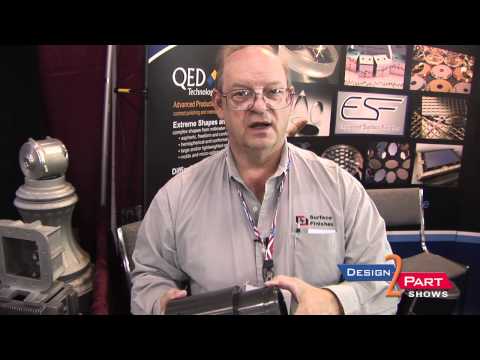
Verified shop facts
- Location
- Aurora, IL
- Processes
- Grinding, CNC Machining, Anodizing, Plating / Finishing, Ceramics
- Materials
- Stainless Steel, Aluminum, Copper, Ceramic
Buyer-intent Q&A
About this supplier
The Surface Finishes division of Cabot Microelectronics specializes in precision polishing, lapping, honing, surface grinding, and diamond machining. Their honing capabilities support both blind and through holes ranging from 0.5 to 48 inches in diameter and lengths up to 40 feet. The facility utilizes diamond machining to produce high-precision specular mirrors and flat surfaces, including components like 6061-T6 aluminum mirrors and gold-plated copper heatsinks for the laser communication industry. They also perform specialized polishing on surgical instruments, such as stainless steel ear surgery mirrors, and achieve surface roughness levels typically under 25 microinches. The team produces high-precision parts, including air bearings with tolerances measured in the millionths of an inch, ensuring minimal drag and zero play. To maintain quality control, the supplier employs accessible flatness measurement devices on the production floor that detect variances as small as ten millionths of an inch. These tools provide an efficient alternative to laser interferometers, allowing for precise, rapid measurements without the need for controlled environments.