Deep Draw Metal Forming - tooling 50% less vs stamping| California Hydroforming |City of Industry CA
California Hydroforming specializes in deep draw forming using a bladder press process. This method uses a urethane bladder and hydraulic fluid to act as the female portion of the draw process, which eliminates the need for extra tooling and is well suited for thin, complex geometries that may be difficult for traditional mechanical or spinning methods. The facility supports a range of project scales, including low volume runs, one offs, and full production. Capabilities include staging complex parts to maintain material thickness requirements and utilizing bulge dies for specific shapes that require tight tolerances, such as those on diameters. Their work serves industries including aerospace, notably producing engine bearing covers and components for turbo exhaust systems and APU units. Materials processed include 300 series stainless steel, 155 stainless, and Inconel 625. By maintaining material thickness and avoiding the scrap rates associated with other methods like stretch forming, the supplier provides an efficient manufacturing alternative. The facility offers expertise in managing odd geometries and configurations that require precise control over the forming process.
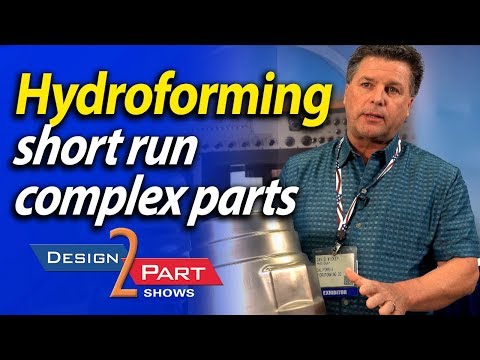
hydroforming is a process of using bladder press you need less tooling it's really good for thin out complex geometries we do low runs one offs production [Music] [Music] hello my name is dave wiki i'm the president of california hydroforming we do deep draw forming as our specialty a lot of times people come in to say do you use water no we don't use water a bladder press consists of a chamber that has a bladder it's a urethane bladder and in this bladder there's hydraulic fluid that hydraulic fluid is used as a medium to generate pressure while we're doing our forming process it allows the material to flow over that surface creating the part we want and that bladder becomes the female portion of our draw process and by doing that eliminates the need for extra tooling to fabricate apart symmetrical parts are great anybody can do that a lot of times with mechanical but it's odd geometries that have the advantage with us this is hydroformed in two pieces our customer gave us this part they're both out of 125 000 and 155 stainless and so we just warm up the part part and then they do the raising and riveting of the fins and everything inside inside there are times when the customer does not want a spun part spinning might not give them certain characteristics they're looking for this is a better method for us to do it cost wise for again for the tooling aspect one of the other things nice about the hydroforming is it's good for maintaining thickness this part for example right here this is made out of 23 000 inco 625 and we can't go below 16 thousandths in minimum thickness so but you can't do this in one form it's just too difficult so you have to stage it it everything has to keep the tolerance and these are the areas that would be more prone prone to having thin out because of the nature of of the geometry of the part it's the aerospace it's a engine bearing cover so anyways yeah this is for a turbo exhaust system it was made in two pieces and then it's been welded together it's out of stainless too as well these here here they go into apu units and they're stainless steel 300 series different configurations we have like a hula hoop we have a flat surface it starts out as a can and then we do trimming and then we put in a bulge die and the bulge die gives you the final shape on this and they're tight tolerance there's about 2 on diameters on these that we have to maintain this part here was originally designed as a two-piece part with a weld along the ridge here then they have to clean it up dress it up up and then penetrate inspect it to make sure the weld joints are good another supplier out there decided to try to do stretch forming on the part but the problem they had because this edge is only about a quarter of an inch or less it's a sheer edge for them and so they were losing 50 percent of their product during the process so they came to us and said can we hydroform it now when we run these we get basically 100 we don't have any scrap in the forming process hydroforming check it out come see us give me a call my name's dave
Back to California HydroformingPartGurus Facility Tour | Official Supplier Channel:
California Hydroforming →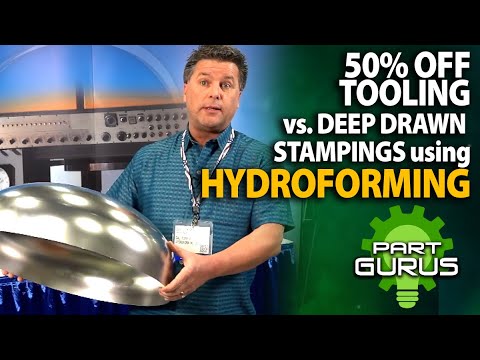
Verified shop facts
- Location
- City of Industry, CA
- Processes
- Deep Draw Stamping, Metal Stamping, Sheet Metal Fabrication, Welding, Hydroforming, Tooling / Mold Making, Short-run Stamping
- Materials
- Stainless Steel, Aluminum, Copper, Brass, Titanium, Nickel / Inconel, Rubber
Buyer-intent Q&A
About this supplier
California Hydroforming specializes in deep draw forming using a bladder press process. This method uses a urethane bladder and hydraulic fluid to act as the female portion of the draw process, which eliminates the need for extra tooling and is well suited for thin, complex geometries that may be difficult for traditional mechanical or spinning methods. The facility supports a range of project scales, including low volume runs, one offs, and full production. Capabilities include staging complex parts to maintain material thickness requirements and utilizing bulge dies for specific shapes that require tight tolerances, such as those on diameters. Their work serves industries including aerospace, notably producing engine bearing covers and components for turbo exhaust systems and APU units. Materials processed include 300 series stainless steel, 155 stainless, and Inconel 625. By maintaining material thickness and avoiding the scrap rates associated with other methods like stretch forming, the supplier provides an efficient manufacturing alternative. The facility offers expertise in managing odd geometries and configurations that require precise control over the forming process.