Hydroforming tooling is 50% less than metal stamping | California Hydroforming | City of Industry CA
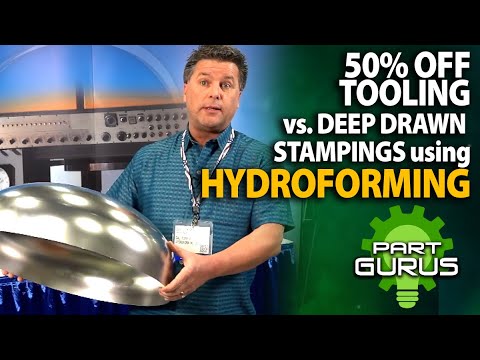
hide your farming is a process of using bladder press you need less tooling it's really good for thin out complex geometries we do low runs one-offs production [Music] hello my name is Dave Wicky I'm the president of California hydroforming we do deep draw forming as our special thing a lot of times people come in to say do use water no we don't use water bladder press consists of a chamber that has a bladder it's a urethane bladder and in this bladder there's hydraulic fluid that hydraulic fluid is used as a medium to generate pressure while we're doing our forming process it allows the material to flow over that surface creating the part we want and that bladder becomes the female portion of our draw process and by doing that eliminates the need for extra tooling to fabricate a part metrical parts are great anybody can do that a lot of times with mechanical but it's odd geometries that have the advantage with us this is hydroformed in two pieces our customer gave us this part they're both out of 125,000 and 155 stainless and so we just warm up the part and then they do the brazing and riveting of the fins and everything inside there are times when the customer does not want a spun part thinning might not give them certain characteristics they're looking for this is a better method for us to do it cost wise for again for the tooling aspect one of the other things nice about the high performing is it's good for maintaining thickness this part for example right here this is made out of 23 thousandths anko 625 and we can't go below 16 thousandths and minimum thickness so but you can't do this in one form it's just too difficult so you have to stage it everything has to keep the tolerance and these are the areas that would be more prone to having thin out because of the nature of the geometry of the part it's the aerospace it's a engine bearing cover so anyways yeah this is for a turbo exhaust system it was made in two pieces and then it's been welded together it's out of stainless too as well these here they go into AP unit and they're stainless steel 300 series different configurations we have like a hula-hoop we have a flat surface that starts out as a can and then we do trimming and then we put in a bulge dye and the bulged ie gives you the final shape on this and there are tight tolerance was about mm on diameters on these that we have to maintain this part here was originally designed as a two-piece part with a weld along the ridge here then they have to clean it up dress it up and then penetrant inspect it to make sure the weld joints are good another supplier out there decided to try to do stretch forming on the part but the problem they had because this edge is only about a quarter of an inch or less it's a shear edge for them and so they were losing 50% of their product during the process so they came to us and said can we hide reform it now when we run these we get a basically a hundred percent we don't have any scrap in the forming process hydroforming check it out come see us give me a call my name's Dave poverty's pliers at d2p calm
Back to California HydroformingPartGurus Facility Tour | Official Supplier Channel:
California Hydroforming →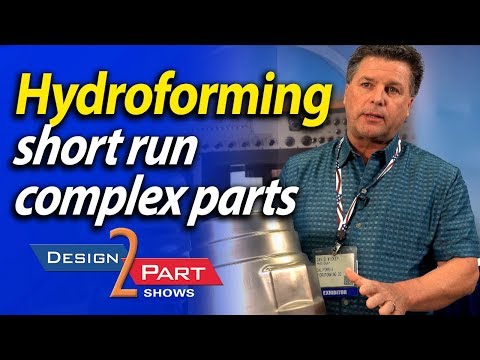
Verified shop facts
- Location
- City of Industry, CA
- Processes
- Deep Draw Stamping, Metal Stamping, Sheet Metal Fabrication, Welding, Hydroforming, Tooling / Mold Making, Short-run Stamping
- Materials
- Stainless Steel, Aluminum, Copper, Brass, Titanium, Nickel / Inconel, Rubber
Buyer-intent Q&A
About this supplier
California Hydroforming specializes in deep draw hydroforming using a bladder press, which utilizes a urethane bladder and hydraulic fluid to shape metal. This process eliminates the need for complex female tooling, making it suitable for creating parts with complex geometries. The facility supports low volume runs, one-offs, and production orders for various industries, including aerospace and turbine applications. Their work involves forming materials such as stainless steel 300 series and Inconel 625. The company focuses on maintaining material thickness and holding tight tolerances, such as reaching two thousandths of an inch on specific diameters. By staging the forming process, they address thin-out concerns and complex geometries that are difficult to achieve through spinning or traditional mechanical forming. The supplier has experience transitioning parts from multi-piece welded designs to single hydroformed components, which can reduce scrap rates and eliminate secondary operations like welding and inspection. Their process is specifically designed to manage challenging geometries and material requirements while optimizing tooling costs.